Anne Lister's five-million-word diaries, written in a complex code she devised herself, remained hidden for decades after her death. When finally deciphered, they revealed a woman unafraid to live openly according to her nature; a legacy that would eventually earn her the title "the first modern lesbian" and place her Halifax home, Shibden Hall, on the UNESCO Memory of the World register.
A Halifax Life
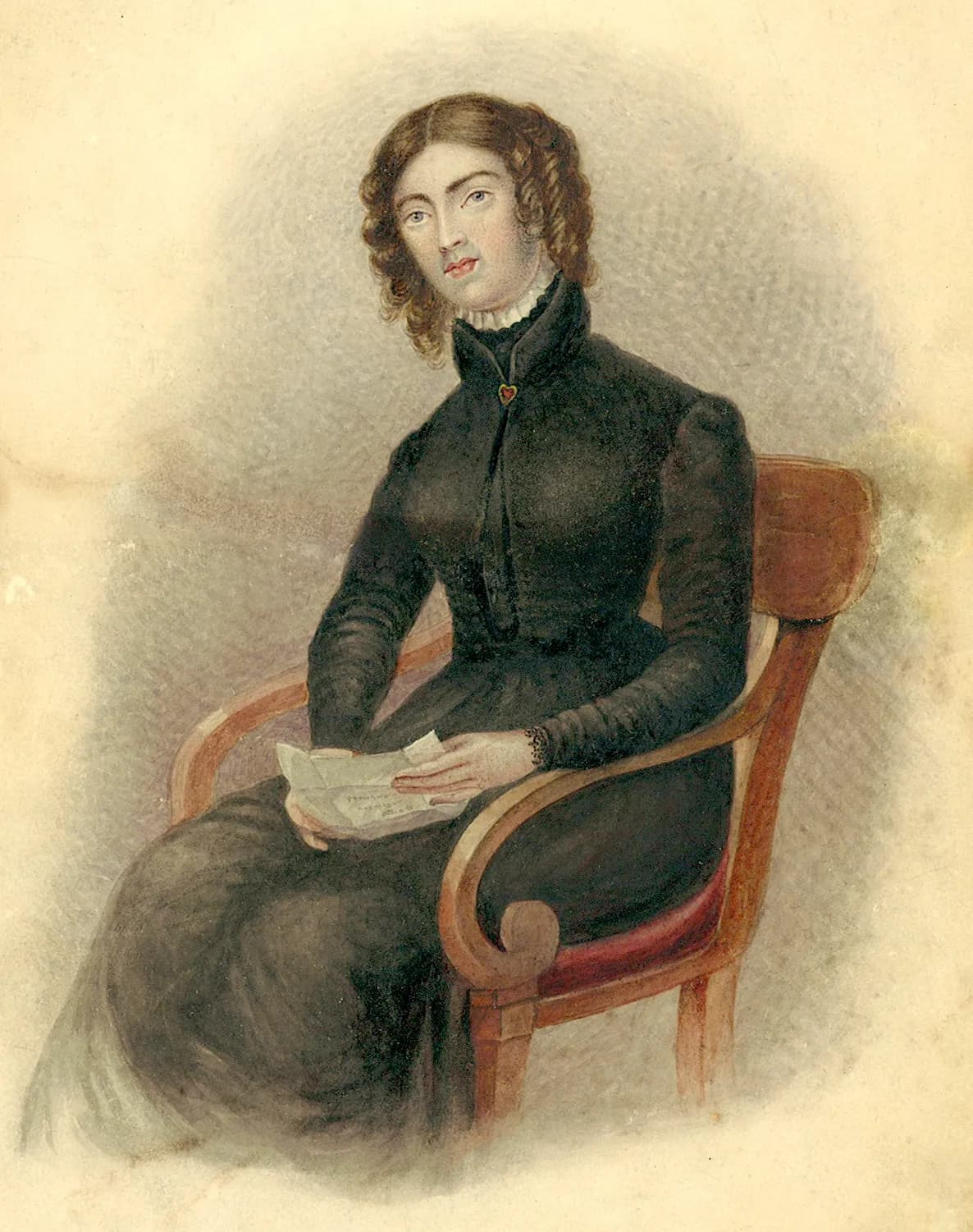
Anne Lister was born on 3 April 1791 in Halifax, the daughter of Captain Jeremy Lister and Rebecca Battle. She and her younger sister Marian were the only survivors of seven siblings. Lister moved into Shibden Hall in 1815, inheriting the estate from her uncle James Lister in 1826, though she only gained full financial control after the deaths of her father and aunt in 1836.
Shibden Hall dates to the fifteenth century, but Lister left her mark upon it. She commissioned York architect John Harper and landscape gardener Samuel Gray to undertake extensive renovations beginning in 1830. A Gothic tower, intended to house her private library, was added in 1838. She constructed a south terrace and rebuilt the east side to create new kitchens and servants' quarters. The Housebody was remodelled in the Jacobethan style, featuring a grand staircase modelled on the altar rail at Halifax Parish Church.
Lister also had a tunnel dug beneath the building so staff could move about without disturbing her. The alterations were largely complete by 1839, though Lister died before seeing the finished Gothic tower.
The Secret Diaries
Lister began keeping diaries in 1806, starting with scraps of paper before moving to bound volumes. By the time of her death in 1840, she had filled twenty-six quarto volumes with approximately five million words. Around one-sixth of the text is encrypted in a code combining Greek alphabet, zodiac symbols, punctuation, and mathematical notation.
The cipher was cracked in the early twentieth century by John Lister, the last inhabitant of Shibden Hall, and his friend Arthur Burrell. Upon discovering the contents, which included graphic portrayals of lesbian relationships, Burrell advised burning the diaries. Instead, John Lister concealed them behind a panel at Shibden Hall.
Academic interest emerged in the 1980s. Helena Whitbread began transcribing the diaries, and Dorothy Thompson and Patricia Hughes at Birmingham University's Department of Modern History translated much of the code. In 2011, the diaries were added to the UNESCO Memory of the World Programme, recognised for providing "a comprehensive and painfully honest account of lesbian life and reflections on her nature."
Shibden Hall Today
Shibden Hall opened as a public museum in 1934, following the estate's conversion to a public park in 1926. The Grade II* listed building houses the West Yorkshire Folk Museum in adjoining barns and farm buildings. Between 2007 and 2008, the park and gardens were restored with £3.9 million from the Heritage Lottery Fund and £1.2 million from Calderdale Council.
Visitors can view Lister's travel writing case, music book, three portraits, and her funeral hatchment. The Lister Carriage is displayed in the barn.
The hall opens annually from March to November, Monday through Saturday from 10:00 to 17:00, and Sunday from 11:00 to 17:00. Admission is £10.00 for adults, £7.50 for concessions, and £27.50 for families. The site includes restored workshops, a collection of horse-drawn carriages, a miniature steam railway, children's play area, and boating lake.
The Gentleman Jack Effect
The 2019 BBC One and HBO series Gentleman Jack, created by Sally Wainwright and starring Suranne Jones, transformed local awareness of Anne Lister. The first series drew almost six million viewers weekly. Shibden Hall was used as a primary filming location, closing for seventeen weeks in 2018 for production. A second series aired in 2022 before HBO cancelled the programme in July 2022.
The cultural impact on Halifax was immediate and substantial. Visitor numbers to Shibden Hall reportedly tripled. Tourists travelled from the United States to see Lister's home. Calderdale Council extended opening hours and considered winter openings to accommodate demand.
Bankfield Museum displays outfits and accessories from the television series. In 2022, Northern Ballet announced a production inspired by Lister's life, scheduled to tour England and Finland from March 2026, with Sally Wainwright serving as creative consultant.
Halifax Locations Connected to Anne Lister
Beyond Shibden Hall, several sites in Halifax retain connections to Lister's life.
Halifax Minster
Anne Lister was baptised at Halifax Parish Church, now Halifax Minster. She worshipped there throughout her life and drew inspiration from its architecture for her renovations at Shibden Hall. Her body was returned from Georgia after her death and interred at the Minster on 29 April 1841. Her broken tombstone, rediscovered during Millennium restoration after being lost since 1878, is now displayed on the north side of the nave.
The Piece Hall
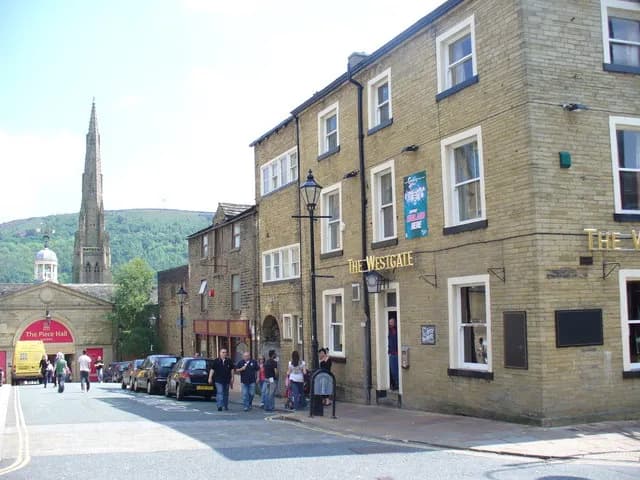
Though Lister normally avoided the cloth market as beneath her social station, she visited The Piece Hall for entertainment. She arrived late for a fireworks display in 1818 and attended hot air balloon ascents there in 1824 and 1837.
Cunnery Wood
This Local Nature Reserve within Shibden Park occupies the footprint of Lister's kitchen garden, fish pond, and rabbit warren. The site offers regular practical conservation days and events.
Stump Cross Inn
Located in Shibden Valley near Shibden Hall, this public house was part of Lister's estate. In the summer of 1837, she bought drinks here for the masons who completed her gatehouse.
The Calder and Hebble Navigation
Lister was a significant investor in the canal, which runs twenty-one miles from Sowerby Bridge to Wakefield with twenty-seven locks. Her diaries record detailed observations about her family's investments; by October 1834, she valued her shares at £430 each. The navigation remains navigable and walkable today.
Northgate Hotel Site
Northgate House, built between 1735 and 1742, passed to Lister in 1826. In 1835, she obtained a licence to convert it to the Northgate Hotel and built an attached casino. The foundation stone, laid on 26 September 1835, contained a time capsule with an inscribed lead scroll and coins. Both structures were demolished in 1961; excavations in 2010 uncovered the casino's basement remains. The site is now occupied by Broad Street Plaza.
A Lasting Union
In 1832, Lister formed a relationship with Ann Walker, a wealthy heiress. On Easter Sunday, 30 March 1834, the two women took communion together at Holy Trinity Church in York and considered themselves married thereafter. The church is now recognised as the site of what is interpreted as the first lesbian marriage in Britain.
A blue plaque with rainbow edging was unveiled at Holy Trinity Church in 2018, York's first LGBTQ history plaque. The original wording, criticised for not mentioning Lister's sexuality, was replaced in 2019 with text identifying her as "Lesbian and Diarist" who "took sacrament here to seal her union with Ann Walker."
Walker and Lister lived together at Shibden Hall until Lister's death from fever in Kutaisi, Georgia, on 22 September 1840, while travelling. Walker had Lister's body returned to Halifax for burial.