The £100 Beginning
In 1890, John Mackintosh and his wife Violet opened a pastry shop on King Cross Lane in Halifax with their joint savings of just £100. That modest investment would transform not only their lives but the entire confectionery industry and Halifax itself.
Violet Mackintosh developed the original toffee recipe that would make the family name famous. She blended traditional brittle English butterscotch with soft American caramel, creating a distinctive new product marketed as "Mackintosh's Celebrated Toffee." The recipe proved so successful that it "ultimately transformed popular understanding of the term 'toffee'," according to company records.
Rise of the Toffee King
By 1894, the business had expanded beyond Halifax. Larger-scale production began at Hope Street premises in 1895, followed by a factory on Queens Road in 1898. The firm became a limited liability company, John Mackintosh Ltd, in 1899, raising £11,000 and borrowing a further £4,000 to build new works at Queen's Road.
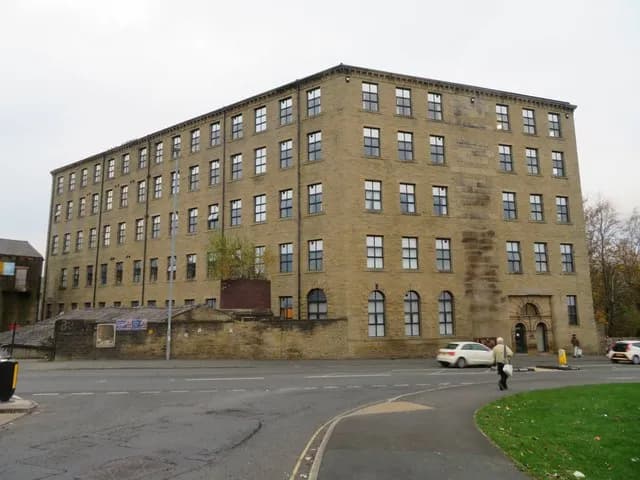
A fire destroyed the Queen's Road factory in 1909, but John Mackintosh used the insurance payout to purchase Albion Mills, a former carpet factory near the railway station. The Queen's Road site was rebuilt and expanded in 1912 to begin chocolate manufacture. By 1914, the company employed some 1,000 people and had established operations in Australia and Canada.
John Mackintosh understood marketing power. By 1896, he was calling himself the "Toffee King" and his product "The King of All the Toffees." He began with handbills advertising toffee as a weekend treat, targeting Saturday afternoons when workers had their half-holiday and weekly wage payment. In 1902, the firm began consumer competitions and national press marketing, buying space in the Daily Mail, then Britain's most popular mass newspaper.
Toffee Town
John Mackintosh died in 1920, but his eldest son Harold Vincent Mackintosh took charge and expanded the business further. In March 1921, the company was floated as John Mackintosh & Sons Ltd. That October, a series of surreal Heath Robinson cartoons depicting "Toffee Town" began a memorable national newspaper campaign. As headquarters of the growing concern, Halifax became known as "Toffee Town."
Harold Mackintosh's business acumen was matched by political ambition. Knighted in 1922 at the age of 31, making him one of the youngest people to be knighted in the 20th century, he was made a baronet in 1935, raised to the peerage as Baron Mackintosh of Halifax in 1948, and became Viscount Mackintosh of Halifax in 1957.
Democratising Chocolate
Harold Mackintosh's most enduring contribution came in 1936. He set out to produce boxes of chocolates that working-class families could afford; previously, only the wealthy could purchase boxed chocolates. Rather than having each piece separated in costly packaging, Mackintosh decided to wrap each piece individually in coloured paper and put them into a decorative tin. He introduced the world's first twist-wrapping machine for this purpose.
The new product was named Quality Street, inspired by J. M. Barrie's play of the same name. The packaging featured two characters in traditional Regency dress known as Miss Sweetly and Major Quality. The original models were Tony and Iris Coles, children of Sydney Coles, who designed the advertising campaign. Harold Oakes of Halifax produced the first illustrations of the characters while working in the packaging and design department.
On 2 May 1936, a full-page advertisement appeared on the front page of the Daily Mail launching Quality Street. The product was manufactured at the Halifax factory and would become a British Christmas staple.
A Legacy of Sweet Success
Mackintosh's continued to innovate. Rolo was launched in 1938, Caramac in 1959, and Toffee Crisp in 1963. The company merged with York-based Rowntree's in 1969 to form Rowntree Mackintosh, which was purchased by Nestlé in 1988.
The Mackintosh family's influence extended beyond confectionery. The former Dean Clough textile mills, located north of Halifax town centre and once one of the largest textile factories in the world at more than half a mile long, have been converted for office and retail use. The Mackintosh name lives on in Halifax's industrial heritage and in the sweets that still bear their name.
From a £100 pastry shop to a global confectionery empire, the Mackintosh story remains one of Halifax's sweetest successes.